What does foggy dual-pane glass replacement involve?+
First confirm whether the moisture is on an accessible glass surface or inside the sealed space. For confirmed between-pane moisture, ask the provider to identify the window and assess the glass unit, sash and frame before proposing replacement. The quote should identify which assembly would be replaced and why, how it will fit the existing opening, and which glazing details and finishing work are included. A description or photograph alone does not establish the condition of the surrounding frame.
How is the price decided?+
The scope depends on the condition, access and parts needed. Ask for a written quote for foggy dual-pane glass replacement, including any callout charge, before authorizing work. Prices are not published on these pages; ask for the written quote.
What information should I have ready?+
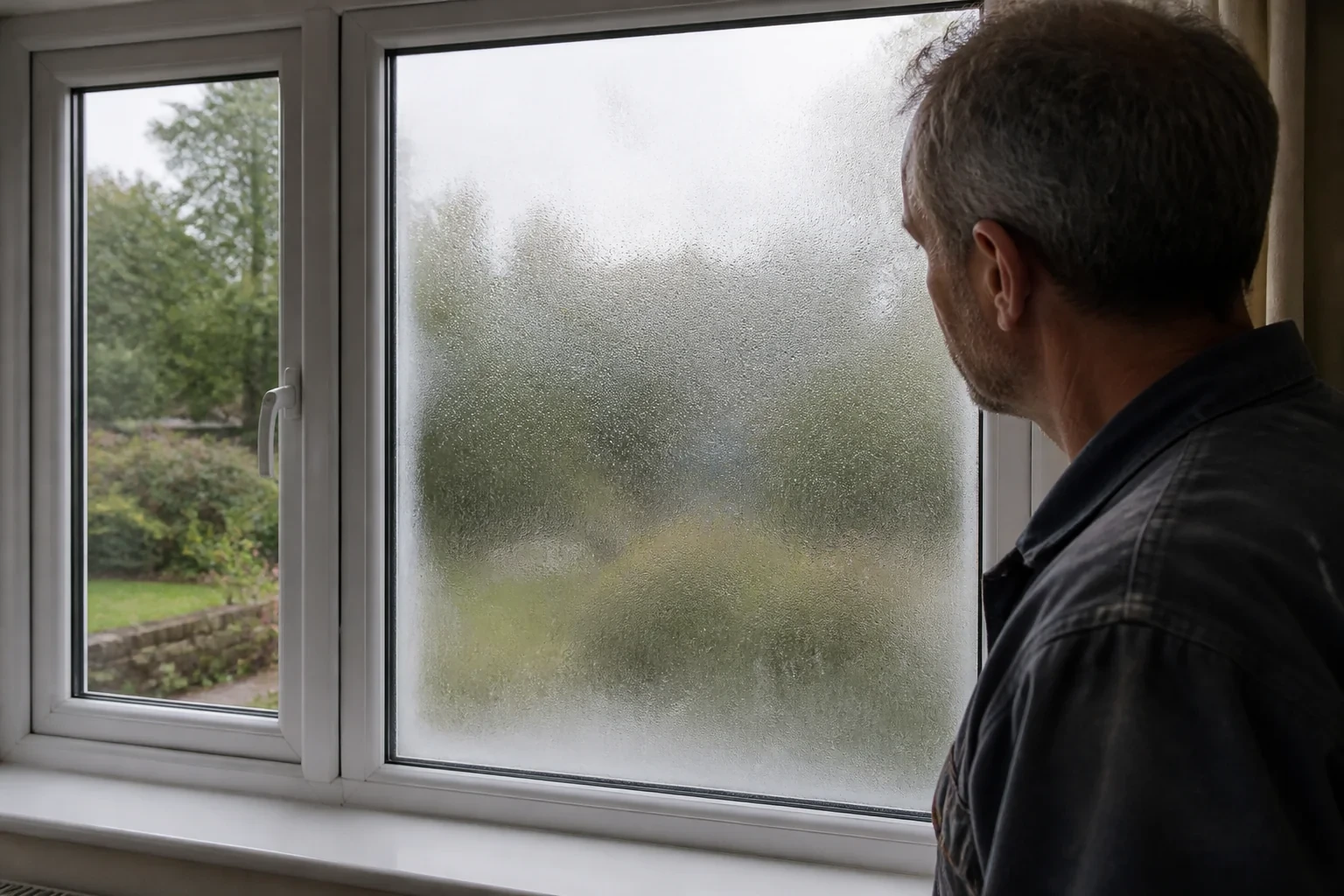
Describe the issue: Fog is trapped between the panes and will not wipe off from either side. Have your address, relevant model or hardware details and any previous work records ready.
How soon can the work be arranged?+
Confirm availability and the expected time on site when you contact the provider. Access, diagnosis and parts availability can affect the appointment; this page does not promise an arrival time.
How will I know what is included?+
Ask which of these are part of the proposed scope: sealed insulated glass unit, spacer system, setting blocks, glazing tape or gasket, glazing stops, sealant. Confirm exclusions and the completion check in writing.
Does fog on the outside mean the sealed glass unit has failed?+
Not by itself. Exterior condensation can form when outdoor moisture meets cooler glass. Moisture on the room-facing surface is also different from moisture inside the sealed space. Describe which surface is affected and when it appears; ask for that distinction to be confirmed before agreeing to sealed-unit replacement.
What does moisture between the panes tell me?+
Andersen identifies condensation between the panes of a sealed dual-pane window as a sign of seal failure. Confirm that the moisture is actually within that sealed space. This observation does not by itself establish the condition of the sash, frame or surrounding wall.
Does the proposal replace the glass unit, the sash or the entire window?+
Ask the provider to name the proposed assembly explicitly. Request the reason for that scope, the existing product identification and the compatible replacement details. If a whole-window replacement is proposed, ask which findings require work beyond the glass and which trim or finishing tasks are included.
What information helps prepare an assessment of foggy glass?+
Record which windows are affected, whether the appearance changes during the day, and whether moisture is visible on an accessible surface. Gather available product labels, prior installation records and photographs. Do not remove glazing parts to collect information; let the provider confirm measurements and construction.
What should the written replacement scope clarify?+
Ask it to identify the replacement assembly, glass specification, matching appearance, removal and disposal, glazing or finishing work, and the completion check. Clarify who supplies any warranty terms and keep the written scope with the product records. These are questions for the provider, not promises about this draft business.
 Service illustration · not a completed customer project